


Drum, vibrating, paddle or roller separators are names that may be incomprehensible to the uninitiated. However, it is enough to know how these devices work, how they are used and what their advantages are to discover how to increase efficiency and have a positive impact on production automation. Imagine a machine whose task is to separate unnecessary elements from the most valuable ones – this is the role of ingot separators . These inconspicuous peripherals for plastics can speed up work and effectively automate production processes. Read on to find out more!
Spis treści
Ingot separators – the most important information
Ingot separators are mainly used for injection molding. The devices separate the ingots from the actual injection parts. This is their main task, but the effect of using such solutions is to accelerate the process and automate production , and thus increase the company’s competitiveness. There are several types of separators , adapted to different needs and shapes of details and ingots. Moreover, separators can be divided into two main groups:
- dependent , i.e. those mounted on belt conveyors ,
- independent , which can work independently and are placed on a separate base (usually on wheels for better mobility).
Each subgroup has different solutions depending on the type of production (size, shape and discrepancies between the dimensions of the ingot and the actual element).
Dependent separators – paddle, roller, spiral
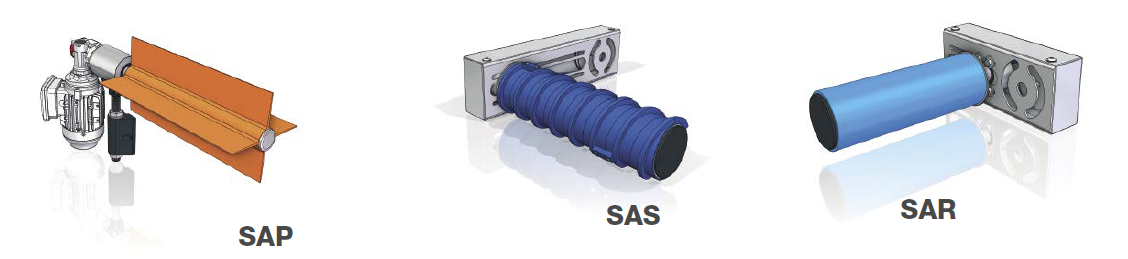
Dependent separators
The simplest and more budget-friendly solutions are dependent separators, which come in the form of a paddle separator (SAP), a shaft/roller (SAR) and a spiral/screw separator (SAS) . All separators are adapted to the process and regulated by changing the distance of the drive shaft from the conveyor belt, which creates the appropriate distance (separation dimension).

Vane separator from Virginio Nastri
Due to the almost unlimited configurations of shapes and dimensions of ingots and details, each separator is selected individually . There are some basic assumptions when using particular solutions, but it is always better to have specialists look at the injection process, conduct practical tests and advise specific solutions. Moreover, all devices can be easily, quickly and conveniently set to various part geometries, so one separator can be used for many different processes.
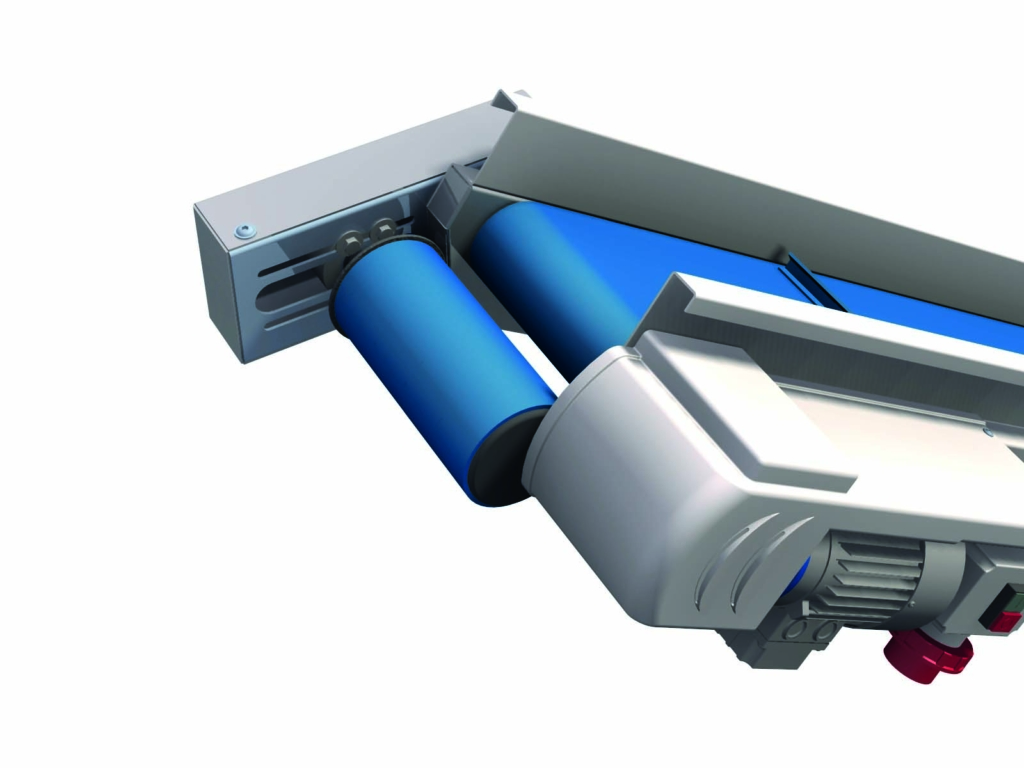
Roller separator from Virginio Nastri
Which dependent separator should I choose?
The paddle type is an ideal solution for larger elements. The spiral and roller grinders are suitable for separating small parts and sprues. However, these two solutions differ. Roller separators are better when one dimension is significantly different from the others, and the use of a spiral one gives greater flexibility in the number of different dimensions.
Independent separators – drum, vibrating and spiral
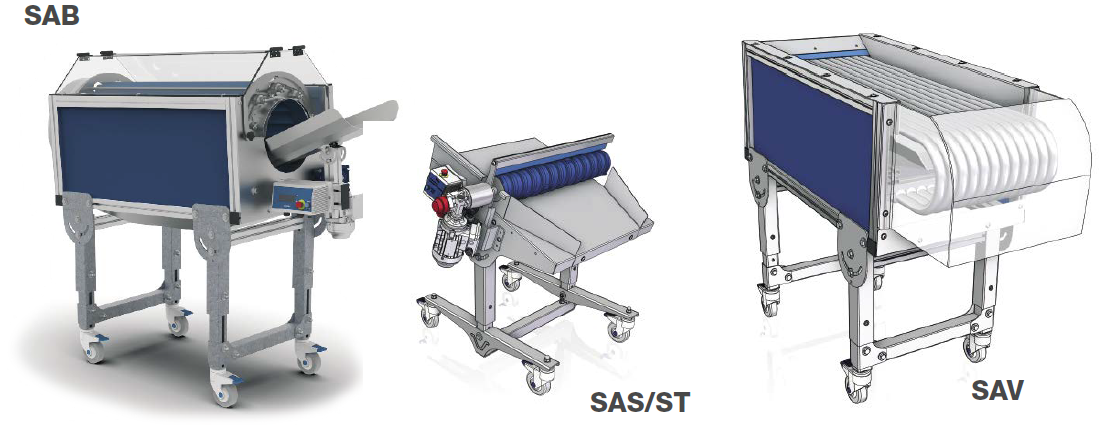
Independent separators
When it comes to independent separators, we can distinguish three basic ones: drum separators (SAB), vibrating separators (SAV) and spiral separators (SAS/ST) . Drum and vibratory are the most accurate separators. In addition to defining the separation space, by adjusting the distances between the rollers (drum) or tubes (vibratory), separators additionally set the elements and ingots in motion through their movement (rotation of the drum in the drum type or vibration of the tubes in the vibratory type). Thanks to this, we can determine a specific separation dimension with longer separation time and rotation of elements/ingots, enabling separation even with very similar shapes.
Drum separators equipped with a system for quick setting of the gap between rollers allow to shorten changeover time. The adjustable angle of inclination and speed of rotation make these devices universal for many applications.
Vibrating separators are a reliable system for separating ingots with almost 100% efficiency . They have the ability to accurately set the height, angle of inclination, distance between the vibrating rollers and the frequency of vibration.
The spiral separator on the platform serves the same purpose as the dependent spiral one, but the platform makes it more mobile and can be used on various conveyor belts, as well as directly when discharging elements from the injection molding machine.

Independent, vibrating separator from Virginio Nastri
Summary
Ingot separators are important elements of the injection molding process, playing a key role in efficient and automated production. With the appropriate selection of separators, it is possible not only to increase the production speed, but also to gain the company’s competitiveness. The choice of a good device depends on many factors, such as the shape, size and the discrepancy between the dimensions of the ingots and the actual element. That is why DOPAK offers a wide range of ingot separators from the Italian company Virginio Nastri, both dependent and independent, tailored to the individual needs of each production.
I encourage you to check out the full DOPAK offer , where you will find ingot separators and conveyors, but also a number of other plastics processing machines that will enable full production automation.
If you have any questions about separators or need specialist advice, please contact:
- Emilia Sikora (West Pomeranian Voivodeship, Pomeranian Voivodeship, Kuyavian-Pomeranian Voivodeship, Warmian-Masurian Voivodeship), e-mail: sikora@dopak.pl , tel. +48 519 537 757
- Ilona Bazgan (Lubuskie, Wielkopolskie, Łódź, Masovian and Podlaskie Voivodeships), e-mail: bazgan@dopak.pl , tel. +48 509 765 325
- Kajetan Danko (Lower Silesian, Opole, Silesian Voivodeships), e-mail: danko@dopak.pl , tel. +48 509 857 229
- Patryk Barski (Lubusz Voivodeship, Świętokrzyskie Voivodeship, Małopolskie Voivodeship, Podkarpackie Voivodeship), e-mail: barski@dopak.pl , tel. +48 519 537 751
Author: Kajetan Danko, Regional Sales Manager , e-mail: danko@dopak.pl , tel. +48 509 857 229


